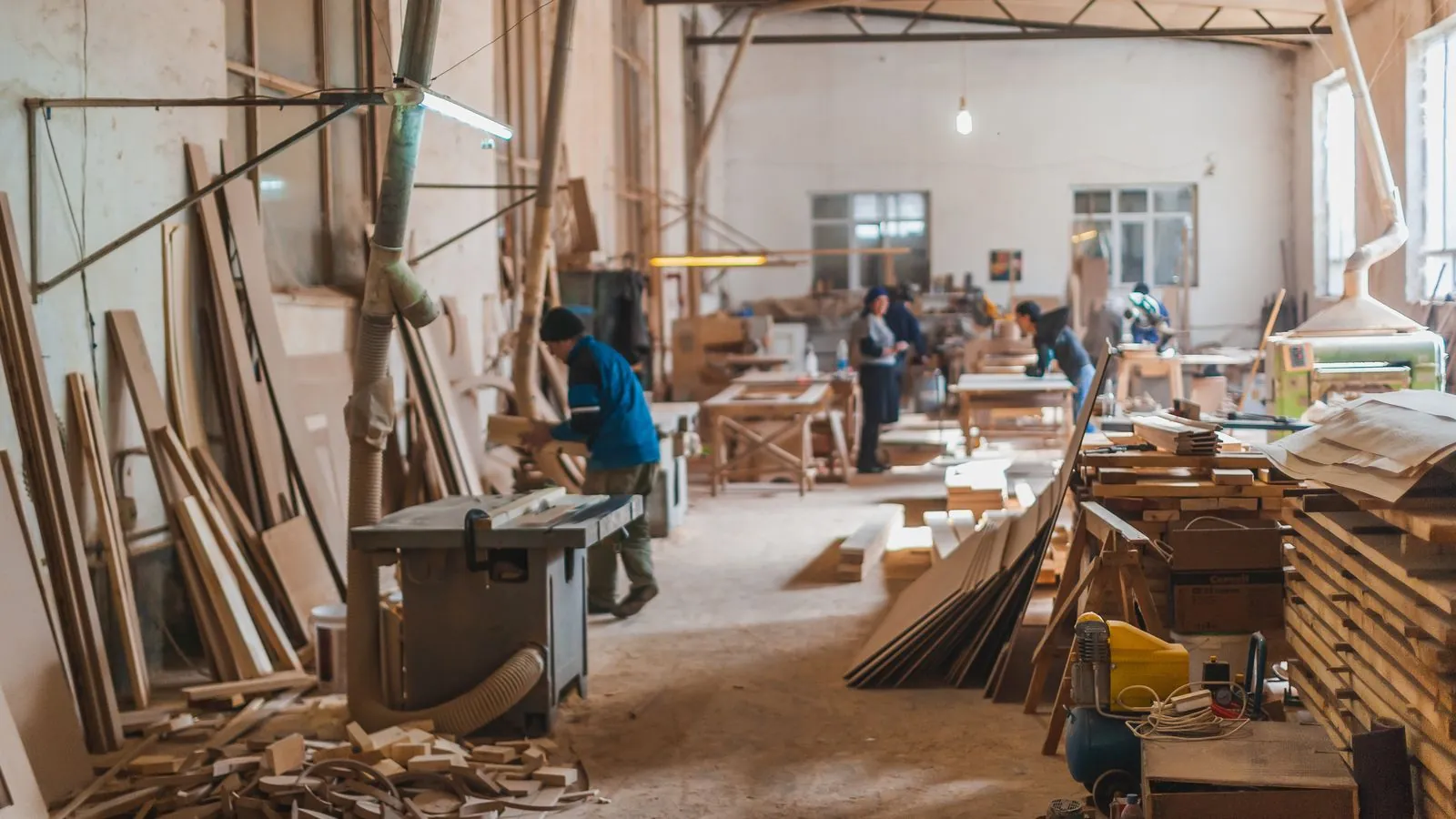
Somewhere today, a twelve person workshop shipped its first pallet abroad. Meanwhile, a factory ten times larger decided exporting was not for them.
The difference was never the size of the building. It was the belief about what exporting actually requires.
Here is the short answer to the question in the title. With the right marketing and channels, any size manufacturer can export.
This article dismantles the size myth piece by piece. Then it shows the exact path small factories use to start.
Where the Size Myth Comes From
Exporting once required infrastructure only large companies could afford. Overseas offices, agent networks, and trade fair circuits cost serious money. The myth formed in that era, and it never got updated.
The internet quietly removed most of those fixed costs. A landing page, a listing, and a video call replace an office. Buyers no longer care where your reception desk is located.
What remains is a belief that outlived its own reasons. Beliefs like that get repeated at trade fairs and dinner tables. Nobody checks them against how buying actually works today.
The companies repeating the myth loudest rarely export at all. Take your advice from working exporters, and the advice changes immediately.
Ask the buyers themselves and the myth dissolves even faster. Importers routinely describe excellent suppliers with thirty employees. No procurement guide anywhere lists headcount as a selection criterion.
What Buyers Actually Care About
Foreign buyers rarely ask how many workers you employ first. They ask about quality, consistency, communication, and delivery reliability. A small factory can win on all four measures.
Small often reads as flexible, focused, and easy to reach. Large factories chase million unit orders and ignore mid size buyers. Those overlooked buyers are the small exporter's natural market.
Keep the principle in view, because it repeats through everything here. With the right marketing and channels, size stops being the question. The question becomes whether buyers can find and trust you.
Ask your best current customer why they stayed with you. The answer will mention response times and reliability, never headcount. Buyers abroad want exactly what buyers at home want.
The Advantages Small Factories Refuse to Claim
Small factories own real advantages that they rarely put into words. Here are the ones buyers value most, waiting to be claimed.
You Can Say Yes to Smaller Orders
Big factories set MOQs that push away growing brands. You can profitably accept the 2,000 unit order they reject. Those growing brands become large customers, and they remember who said yes.
Flexibility on order size is a genuine market position. Advertise it plainly instead of apologizing for it.
The Owner Can Talk to the Buyer
In a small factory, the decision maker answers the call. Questions get resolved in hours instead of committee weeks. Buyers consistently rank this above another zero on the capacity page.
Trust also forms faster when the name on the email owns the building. No account manager layer means no message loss.
You Can Specialize Where Giants Cannot
A small factory can dominate one narrow product family completely. Giants must spread attention across hundreds of catalog lines. Depth in a niche beats breadth in almost every buyer search.
Specialists also rank easier online, because their pages match specific searches. The niche that feels limiting locally is an identity globally.
Your Story Is Easier to Tell
A small factory has faces, names, and a founding story. Buyers remember the workshop where the founder answered the video call. Giant suppliers blur together, while small ones stay memorable.
Tell the story plainly on your about page and profiles. Memorability compounds every other marketing dollar you spend.
The Honest Constraints, and the Workarounds
Capacity is real: you cannot serve a hypermarket chain tomorrow. So choose buyers whose volumes fit what you actually produce. Sell your realistic capacity honestly, and serious buyers plan around it.
Cash flow is the sharper constraint for most small exporters. Deposits, trial orders, and staged shipments keep the exposure survivable. Programs like those from the Small Business Administration exist exactly for this gap, and most exporting countries run equivalents.
Bandwidth is the constraint nobody prices in advance. The workaround is choosing two channels and refusing the rest. A focused small team beats a scattered large one online.
Notice that every workaround above is procedural, not financial. Written terms, honest capacity pages, and channel discipline cost attention. Attention is the one resource sized equally at every factory.
What It Costs to Start, Realistically
A credible export start costs less than one trade fair booth. A localized website, one marketplace presence, and steady outreach cover it. Budget a year of patience alongside the money.
The spending scales with ambition, not with company size. That is the quiet revolution most small factories have not noticed. The tools price by usage, and usage starts small.
Compare that against the price of staying domestic forever. Concentration risk in a single market is a cost too. It simply arrives later, and it arrives all at once.
The Path Small Exporters Actually Take
The pattern repeats across industries with boring reliability. One product family, one target market, one properly localized page. One demand channel worked consistently, and every inquiry answered fast.
Our guide on how manufacturers can market internationally details the full five stage sequence. Nothing in it requires headcount, and none of the stages care about your floor space.
Notice what the path actually demands from a factory. Focus, consistency, and honest proof, applied for a year. With the right marketing and channels, a five person factory runs it.
Proof From the Real World
Look at any exporting country's statistics and the pattern repeats. Small and medium enterprises make up the great majority of exporting firms. Data collected by the International Trade Administration has shown this for decades in the United States.
The giants dominate export value, but not export participation. Participation is the game a small factory needs to win first. One steady foreign customer changes a small factory's entire year.
The same pattern holds across Europe and across Asia. Export participation skews small everywhere the data gets published. The myth survives on feelings, never on the statistics.
Three Small Exporter Profiles That Work
The niche specialist runs one product family with obsessive depth. Buyers find them through search because nobody else matches the phrase. Premium pricing follows naturally when nobody else matches it.
The flexible partner offers modest MOQs, fast sampling, and quick answers. Growing e-commerce brands build their supply chains around such factories. Those brands scale, and their factory scales quietly with them.
The regional champion dominates at home and adds one neighboring market. Familiar logistics and culture make the first export step short. Confidence earned nearby funds the bigger jumps later.
How Buyers Find Small Factories Today
Three discovery routes carry most first contacts in this decade. Search in the buyer's language, marketplace filters, and LinkedIn visibility. All three are open at identical prices to every factory size.
Our guide on generating manufacturer leads online walks the channels in order. Pick two, run them for two quarters, and measure honestly.
Notice one more time what those channels have in common. With the right marketing and channels, discovery ignores your headcount. The buyer only sees the page, the listing, and the reply.
The Mistakes That Actually Stop Small Exporters
Size gets blamed for failures that discipline would have prevented. Quoting slowly, skipping translation, and chasing five markets at once. Underpricing to compensate for size is the most common self wound.
Underpricing deserves its own warning, because it always feels safe. Buyers read suspicious cheapness as risk, never as generosity. Price for your quality, and let the proof justify the number.
None of those mistakes are structural, and all are fixable. The factories that fix them stop noticing their own size.
So, Can a Small Manufacturer Export?
Yes, and thousands quietly do it every single month. The barriers that remain are knowledge and visibility, not scale. Both can be learned, built, or bought on a small budget.
Say it once more, because it is the entire answer. With the right marketing and channels, any size manufacturer can export. The factories that believe this are already taking the orders.
Waiting to grow first carries a hidden price of its own. The learning that exporting forces is what grows factories fastest. Shipping abroad while small teaches lessons the domestic market never will.
Ready to export at your size?
We build export marketing systems for factories of every size, and we're happy to map the first market and channel for yours, with no pitch required.
Start your free trialSize decides how much you can ship, never whether you can. Start smaller than feels impressive, and let the reorders scale you.